
What if the problem isn’t a lack of effort, but a lack of alignment? A business can be busy while cash flow tightens and decisions fail to translate into progress. A business turnaround consultant helps identify what is holding performance back and move the organisation from diagnosis to coordinated action.
When performance is under pressure, it can be difficult to set priorities. The cause may sit in the strategy, the structure, unclear accountability or the way work gets done. The answer isn’t necessarily to ask people to agree on everything. It’s to get strategy, people and processes working towards the same outcome.
This guide explains the practical stages of a turnaround, from assessing performance and setting focused priorities to putting the plan into practice. It also covers how to distinguish a leadership gap from a process or alignment problem, when experienced executive support may help, and what to assess before engaging it.
Key Takeaways
- Cash-flow pressure, missed priorities and unclear accountability can signal a need for closer assessment, but no single sign explains the cause.
- A business turnaround consultant can help establish the current position and turn diagnosis into focused, coordinated action.
- Alignment means connecting strategy, people, processes and execution around the same outcome, not requiring everyone to agree.
- Before choosing support, clarify whether the business needs advice, hands-on interim leadership or recovery support, and how progress will be reviewed.
When does a business need a turnaround consultant?
A business turnaround consultant provides practical support to diagnose and address serious performance challenges. The work can include examining cash flow, operations, strategic priorities, leadership and accountability. These factors often interact. For example, delayed decisions can leave teams working to different priorities, while unclear ownership makes recurring problems harder to resolve.
A turnaround isn’t simply a programme of cuts. Reducing costs may ease immediate pressure, but it won’t resolve a strategy that no longer fits, processes that slow delivery or teams that aren’t working towards the same outcome. Turnaround management covers the broader journey from assessing a business to implementing change. The right response depends on what’s driving the performance issue.
What signs suggest the business is losing momentum?
Look for patterns, not one difficult week. Recurring missed commitments, repeatedly delayed decisions and work with no clear owner are prompts to investigate. So are persistent cash-flow pressures or priorities that keep shifting without progress. A temporary setback may have a clear cause and a contained effect. A pattern starts to affect performance, delivery or cash flow across the business. Review what’s changing, how often it happens and where responsibility sits before deciding what support is needed.
Is a turnaround consultant only for a business in crisis?
No. Leaders may seek additional capability when performance is under pressure, the organisation is changing or leadership capacity is stretched. Outside support can help clarify the issues and bring practical oversight to execution. But not every challenge calls for a consultant. If leaders can identify the cause, assign clear ownership and follow through, the next step may be internal. Consider external support when the gap between decisions and day-to-day action remains unresolved.
How a business turnaround consultant moves from diagnosis to action
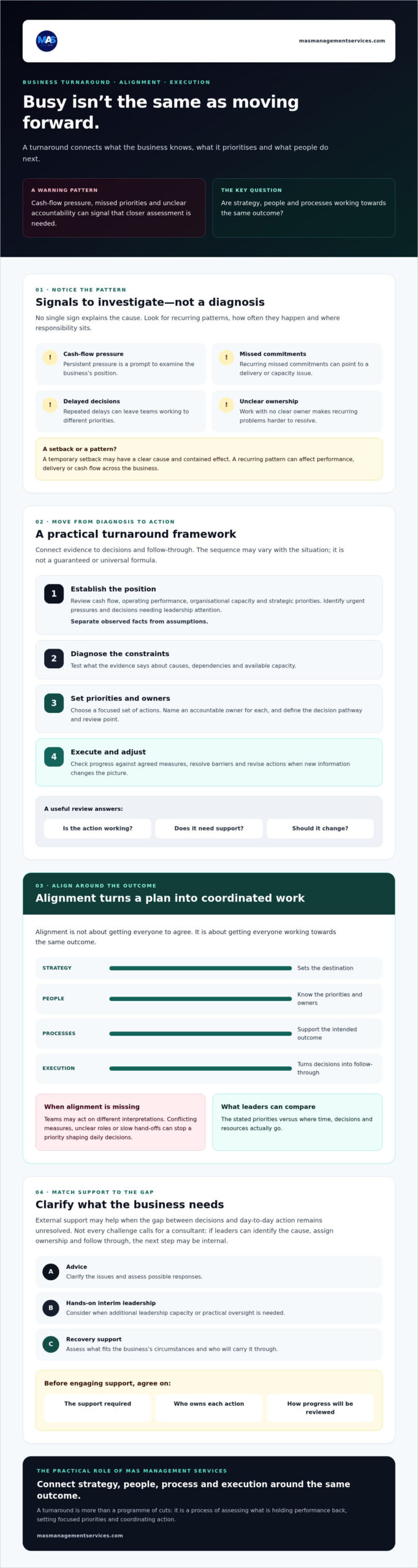
A useful turnaround framework moves through four steps. The sequence may vary with the situation, but each step should connect evidence to decisions and follow-through. A business turnaround consultant can help leadership make that connection, particularly when analysis alone isn’t changing day-to-day execution.
What should the initial assessment examine?
1. Establish the position. Review cash flow, operating performance, organisational capacity and strategic priorities. Identify urgent pressures and decisions that need leadership attention. Separate observed facts from assumptions. For example, confirm which commitments are delayed and why before concluding that a particular team or process is the cause.
How do priorities become coordinated execution?
2. Diagnose the constraints. Test what the evidence says about causes, dependencies and available capacity. 3. Set priorities and owners. Choose a focused set of actions, name an accountable owner for each, and define the decision pathway and review point. 4. Execute and adjust. Check progress against agreed measures, resolve barriers and revise actions when new information changes the picture. This is a working framework, not a guaranteed or universal sequence.
A priority becomes executable when strategy, people and processes support the same intended outcome. If improving delivery is the goal, for instance, leaders need to clarify what takes precedence, who can resolve cross-team decisions and how progress will be reviewed. The Turnaround recovery strategies reference outlines possible actions. The business still needs to assess which fit its circumstances and assign responsibility for carrying them through.
Effective reviews don’t just report activity. They help leaders decide whether an action is working, needs support or should change. If the gap between decisions and execution remains, practical support such as MAS’s Restructuring & Recovery support may be worth exploring.
How alignment helps a turnaround deliver more than short-term fixes
A turnaround can stall when each team acts on its own interpretation of the plan. Cost reductions in one area may disrupt delivery elsewhere. Leaders may agree on a priority, yet conflicting measures, unclear roles or slow hand-offs can prevent it from shaping daily decisions.
Alignment doesn’t mean universal agreement. It means people understand the intended outcome and can direct their work towards it. Strategy sets the destination. People, processes and execution need to support the same direction.
How can leaders identify misalignment during a turnaround?
Compare the stated priorities with where time, decisions and resources actually go. If a declared priority keeps losing capacity to competing work, there’s a gap to resolve. Trace hand-offs between teams, too. Important work can fall between roles when responsibility transfers but no one owns the result. A business turnaround consultant can help leaders surface these disconnects and clarify where decisions belong.
Use a simple alignment check for each priority:
- Shared priority: Do the people involved understand the intended outcome?
- Accountable owner: Is one person responsible for driving it forward?
- Decision authority: Is it clear who can resolve obstacles or approve changes?
- Progress review: Is there a regular point to assess outcomes and address blockers?
What keeps the plan connected to day-to-day work?
Review actions, blockers and decisions requiring escalation at a consistent cadence. Keep the discussion focused on progress against agreed outcomes, not activity or meeting attendance. If a commitment is off track, establish what’s stopping it, who can act and whether the plan needs adjustment.
Practical leadership can help connect a turnaround plan to everyday execution. The Turnaround Management Association’s Choosing a turnaround professional resource can inform how you assess potential support. To discuss how Restructuring & Recovery support might help connect priorities and execution, speak with MAS Management Services.
Choosing a business turnaround consultant and agreeing the next steps
The right support depends on the gap you need to close. If leaders can make and carry out decisions but need an independent view, advisory input may be enough. If priorities are clear but execution lacks ownership or capacity, consider whether interim executive involvement is needed. Where performance pressure calls for broader recovery support, clarify the scope before work begins.
What should the engagement clarify before work begins?
Ask a prospective business turnaround consultant to explain how they’ll assess the situation and what evidence they’ll need. Then agree on the focus, decision rights and working arrangements. Useful questions include:
- Which business challenges and decisions will the work address?
- What outcomes will indicate progress, and how often will they be reviewed?
- Will the role provide recommendations, hands-on executive leadership, or both?
- How will owners, the board, management and any embedded executive work together?
- Who can approve changes, resolve barriers and escalate concerns?
Be clear about who remains accountable inside the business. An external leader can add capability and oversight, but the engagement should establish how decisions connect with existing governance and management responsibilities.
When could MAS Management Services be relevant?
MAS Management Services provides Restructuring & Recovery and Interim & Fractional Leadership for organisations facing performance pressure, change or leadership gaps. Its practical executive support connects strategy with day-to-day execution. If you’re weighing up whether an embedded leader is appropriate, read the interim executive services guide.
Once you’ve assessed the issue, the capability gap and the decisions requiring support, a conversation can help clarify possible next steps. You can request a free one-on-one consultation with MAS Management Services.
Turn a clear diagnosis into coordinated action
A turnaround starts with understanding what is holding performance back. Cash-flow pressure may be visible, but the underlying issue can also involve decision-making, unclear ownership or disconnected processes. A business turnaround consultant can help leaders assess the causes, set priorities and move from recommendations to practical execution.
The work is more likely to stay on course when each priority has an accountable owner, clear decision-making authority and a regular progress review. Alignment doesn’t require everyone to agree on every decision. It requires people, processes and leadership to work towards the same business outcome.
MAS Management Services offers Restructuring & Recovery and practical executive support when it matters. If you’re assessing the pressures on your business and the support that may help, book a free one-on-one consultation.
Frequently Asked Questions
What does a business turnaround consultant do?
A business turnaround consultant helps leaders understand why performance is under pressure and what needs to change. They may assess cash flow, operations, strategy, leadership and accountability, then help turn findings into priorities and practical actions. The role can be advisory or more hands-on, depending on the agreed scope. The aim is clearer decisions and coordinated execution, not simply a list of recommendations.
When should a business hire a turnaround consultant?
Consider external support when performance pressure persists and leaders can’t clearly identify or resolve its causes. Recurring cash-flow strain, missed commitments, delayed decisions or unclear ownership can prompt a closer assessment, but no single sign proves a turnaround is needed. First examine whether the issue is temporary or part of a wider pattern, and whether the business has the leadership capacity to address it.
Is a business turnaround consultant the same as a restructuring consultant?
The terms can overlap, and their meaning depends on the engagement. Turnaround support generally focuses on diagnosing and addressing serious performance challenges. Restructuring may be one part of that work, such as changing operating arrangements, responsibilities or financial structures. Ask what the proposed engagement will assess and deliver. The scope matters more than the title, particularly if you need execution support as well as advice.
How does a business turnaround consultant improve execution?
They can help translate agreed priorities into actions with clear owners, decision pathways and progress reviews. This makes it easier to identify blockers and adjust work when new information emerges. Execution also improves when strategy, people and processes support the same outcome. Depending on the engagement, support may remain advisory or include practical executive involvement to help connect the plan with day-to-day work.
Does a business turnaround consultant take over running the business?
Not automatically. An adviser may assess the business and recommend actions while existing leaders retain operational responsibility. An interim executive may take on a defined leadership role, with responsibilities and decision-making authority agreed before the engagement begins. Clarify how the external support will work with owners, the board and management, and who remains accountable for key decisions. The scope should make those boundaries clear.